EcoFlow RIVER 2 vs Anker SOLIX C300: which should you buy?
Choose the EcoFlow RIVER 2 for a lower list price, more watt-hours per dollar, lower weight and faster solar charging. Choose the Anker SOLIX C300 for more capacity and faster UPS switchover. Only the Anker SOLIX C300 meets our requirements for camping.
Where can you buy each one?
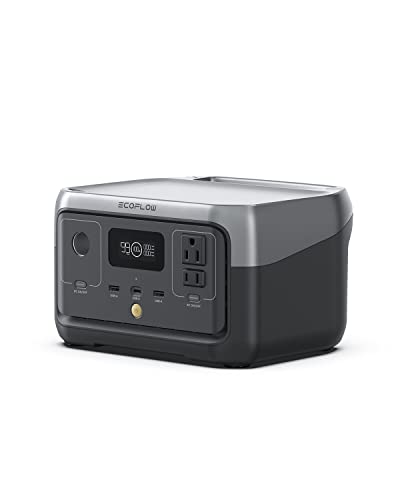
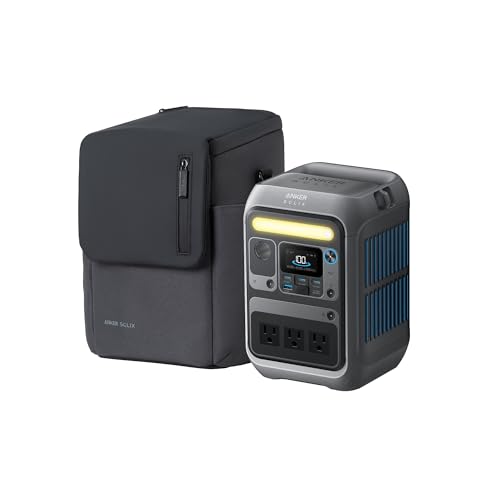
How do the EcoFlow RIVER 2 and Anker SOLIX C300 specs compare?
A dot marks the better figure where the two differ by 5% or more. Sources: EcoFlow and Anker SOLIX official pages, checked 2026-10-12.
| EcoFlow RIVER 2 | Anker SOLIX C300 | |
|---|---|---|
| Capacity | 243 Wh | 288 Wh |
| AC output | 300 W | 300 W |
| Surge | 600 W | 600 W |
| Weight | 7.7 lb | 9.1 lb |
| Solar input | 110 W | 100 W |
| Rated cycles | 3,000 | 3,000 |
| AC charging | 360 W | 330 W |
| UPS switchover | 30 ms | 10 ms |
| List price | $209 | $329.99 |
| Wh per list $ | 1.16 | 0.87 |
| Chemistry | LiFePO4 | LiFePO4 |
| Expandable | Not published | No |
| AC outlets | Not published | 3 |
Which one runs your appliances longer?
Calculated from each battery's rated capacity at 85% inverter efficiency, one appliance at a time from a full charge.
How do the two compare at a glance?
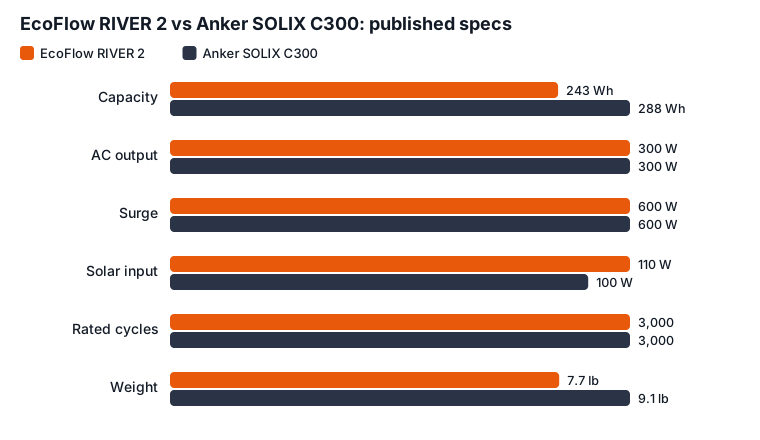
How long does each one run common appliances?
Both run the same set of appliances; capacity decides how long. Runtimes are one appliance at a time from a full charge.
| Appliance | EcoFlow RIVER 2 | Anker SOLIX C300 |
|---|---|---|
| Wi-Fi router / modem | 10 h | 12 h |
| CPAP with heated humidifier | 3.7 h | 4.4 h |
| Refrigerator | Can’t run | Can’t run |
| Chest freezer | Can’t run | Can’t run |
| TV | 1.7 h | 2.0 h |
| Laptop | 4.1 h | 4.9 h |
| Starlink Standard kit | 2.1 h | 2.4 h |
| Microwave oven | Can’t run | Can’t run |
| Electric kettle | Can’t run | Can’t run |
| Window air conditioner | Can’t run | Can’t run |
| Space heater | Can’t run | Can’t run |
| Well pump | Can’t run | Can’t run |
| Check price | On Amazon | On Amazon |
Which uses does each one qualify for?
The EcoFlow RIVER 2 meets our requirements for 2 of 12 uses and the Anker SOLIX C300 for 3. Each list's thresholds are explained on its page.
Which one recharges faster from solar?
At their limits, the EcoFlow RIVER 2 refills in about 2.2 hours of strong sun and the Anker SOLIX C300 in about 2.9. With smaller arrays the bigger battery takes longer.
Which costs less over its rated life?
The EcoFlow RIVER 2 does: about $0.29 per kWh of rated lifetime storage against $0.38.
| EcoFlow RIVER 2 | Anker SOLIX C300 | |
|---|---|---|
| List price | $209 | $329.99 |
| Rated cycles | 3,000 | 3,000 |
| Lifetime energy | 729 kWh | 864 kWh |
| Cost per lifetime kWh | $0.29 | $0.38 |
| Check price | On Amazon | On Amazon |
Rated cycles are each maker's figure under its own test conditions, and capacity fades with age, so treat this as a comparison between the two, not a forecast.
How long does each last at a steady load?
At the same steady draw, the bigger battery lasts proportionally longer, until a load passes the smaller inverter's limit.
Which one recharges faster from the wall?
Wall charging decides how quickly you are ready again between outages or trips.
- EcoFlow RIVER 2: accepts up to 360 W from the wall and is rated to refill in about 60 minutes.
- Anker SOLIX C300: accepts up to 330 W from the wall.
How does each rank within its own size band?
A head-to-head can hide that both models are strong or weak for their size. The EcoFlow RIVER 2 is ranked among Under 500 Wh models and the Anker SOLIX C300 among Under 500 Wh models.
Can either one cover CPAP nights or go on a plane?
For a CPAP with a heated humidifier at ResMed's typical 56.1 W, the EcoFlow RIVER 2 covers about 0.5 eight-hour nights and the Anker SOLIX C300 about 0.5. Neither can fly: both are over the FAA's 160 Wh limit for passenger aircraft.
Without the humidifier a CPAP draws far less, so nights stretch well beyond these figures. See CPAP runtimes and flying with a power station.
Which one is easier to carry?
The EcoFlow RIVER 2 is lighter by 1.4 lb. Watt-hours per pound shows which packs more battery for the weight.
- EcoFlow RIVER 2: 7.7 lb, 32 Wh per pound, 9.6 × 8.5 × 5.7 in.
- Anker SOLIX C300: 9.1 lb, 32 Wh per pound, 6.46 × 6.34 × 9.45 in.
What do they share, and what isn't published?
They match on AC output, surge and rated cycles, so those specs won't decide it. Both publish every spec we track.
Which should you pick for your use?
Where only one of them qualifies, the choice is made for you:
- Best portable power stations for camping: the Anker SOLIX C300, because only it meets capacity ≥ 250 Wh, capacity ≤ 1,100 Wh and weight ≤ 25 lb.
When should you buy neither?
If one spec matters most, a similar-size model may beat both on it:
- AC output: the EcoFlow RIVER 3 Plus (600 W) beats both.
- Surge: the EcoFlow RIVER 3 Plus (1,200 W) beats both.
- Solar input: the EcoFlow RIVER 3 Plus (220 W) beats both.
- AC charging: the Jackery Explorer 240 v2 (550 W) beats both.
- Rated cycles: the Jackery Explorer 240 v2 (4,000) beats both.
- Weight: the Jackery Explorer 300 (7.1 lb) beats both.
Related
How this page was made. Specs come from each manufacturer's official US spec page or manual, checked on the date shown; specs a manufacturer doesn't publish are marked "Not published". Runtimes are calculated (capacity × 85% inverter efficiency ÷ appliance draw), not measured. We haven't hands-on tested these units. Method and sources · Affiliate disclosure