Power stations that can run a window air conditioner
Which power station runs a window air conditioner longest?
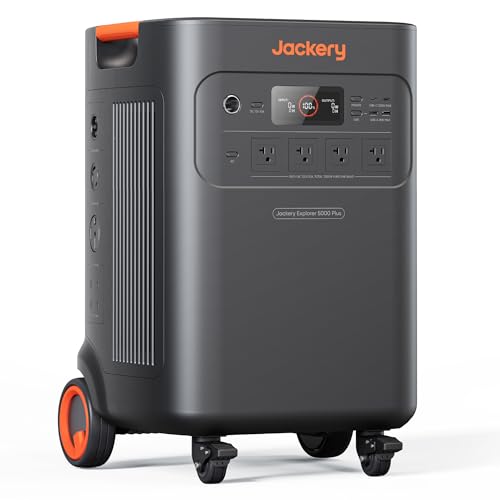
The Jackery Explorer 5000 Plus leads this list on window air conditioner runtime (6.0 h), among the 21 of 56 current models that meet every requirement. From another brand, the EcoFlow DELTA Pro 3 comes next (4.8 h).
Why these requirements?
A window AC's cited start-up draw is 2,800 W and it runs at about 720 W, so it needs a large inverter and 2,000 Wh or more for a few hours of cooling.
Which models qualify for running a window AC for several hours?
Sorted by window air conditioner runtimeWhich models just miss?
These miss exactly one requirement, closest misses first.
- ✕Anker SOLIX S2000 · needs AC output ≥ 1,800 W; has 1,500 W
- ✕Jackery Explorer 1500 v2 · needs capacity ≥ 2,000 Wh; has 1,536 Wh
- ✕Jackery Explorer 1500 Ultra · needs capacity ≥ 2,000 Wh; has 1,536 Wh
- ✕Goal Zero Yeti 1500 · needs capacity ≥ 2,000 Wh; has 1,505.28 Wh
- ✕Jackery Explorer 1000 Plus · needs capacity ≥ 2,000 Wh; has 1,264 Wh
- ✕EcoFlow DELTA 3 Classic · needs capacity ≥ 2,000 Wh; has 1,024 Wh
How do the qualifying models score for running a window AC for several hours?
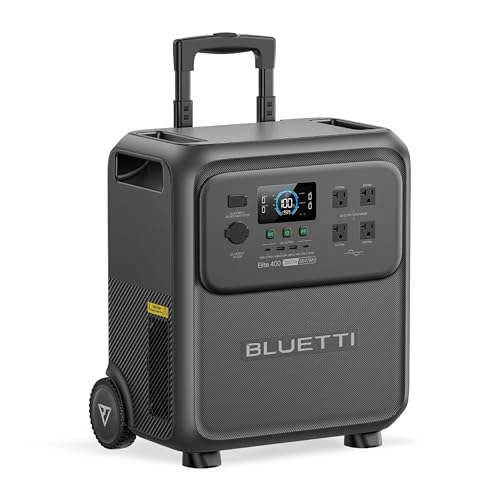
Scoring only the 21 models that pass every requirement, the Jackery Explorer 5000 Plus scores highest (69 of 100), ahead of the BLUETTI Elite 400 (68).
Weights: window air conditioner runtime 40%, capacity 20%, Wh per list dollar 20%, low weight 10% and rated cycles 10%. Models missing a scored spec are marked †. How the score works.
How do the top picks meet each requirement?
Every model below passes all 3 requirements; the matrix shows by how much.
| Requirement | Jackery Explorer 5000 Plus | BLUETTI Elite 400 | Jackery HomePower 3600 Plus | Jackery HomePower 3600 Pro Max | BLUETTI Elite 300 |
|---|---|---|---|---|---|
| capacity ≥ 2,000 Wh | ✓ 5,040 Wh | ✓ 3,840 Wh | ✓ 3,584 Wh | ✓ 3,584 Wh | ✓ 3,014.4 Wh |
| AC output ≥ 1,800 W | ✓ 7,200 W | ✓ 2,600 W | ✓ 3,600 W | ✓ 2,000 W | ✓ 2,400 W |
| surge ≥ 2,800 W | ✓ 14,400 W | ✓ 5,200 W | ✓ 7,200 W | ✓ 4,000 W | ✓ 4,800 W |
| Check price | On Amazon | On Amazon | On Amazon | On Amazon | On Amazon |
Why is the Jackery Explorer 5000 Plus ahead of the BLUETTI Elite 400?
The Jackery Explorer 5000 Plus beats the BLUETTI Elite 400 on window air conditioner runtime (6.0 h vs 4.5 h) and capacity (5,040 Wh vs 3,840 Wh).
The BLUETTI Elite 400 is the better pick if Wh per list dollar and low weight matter more to you (2.74 Wh per $ vs 1.44 Wh per $ and 86.0 lb vs 134.5 lb).
When should you not pick the Jackery Explorer 5000 Plus?
Pick something else in these cases:
- Weight matters most. At 134.5 lb it is heavier than the median qualifying model; the Jackery Explorer 2000 v2 weighs 39.5 lb.
- Budget is tight. Its $3,499 list price is above the median qualifying model; the Jackery Explorer 2000 v2 lists at $999.
Which requirement rules out the most models?
The capacity ≥ 2,000 Wh requirement is the hardest to meet: 32 of the 56 current models fail it. Together the requirements leave 21 qualifying models.
| Requirement | Pass | Fail | Not published |
|---|---|---|---|
| capacity ≥ 2,000 Wh | 24 | 32 | 0 |
| AC output ≥ 1,800 W | 37 | 19 | 0 |
| surge ≥ 2,800 W | 36 | 14 | 6 |
How fast do qualifying models recharge?
The Anker SOLIX F3800 Plus refills fastest from solar, about 1.2 h of strong sun at its full input.
| Model | Solar, at full input | Max wall input | Rated full wall charge | Check price |
|---|---|---|---|---|
| Anker SOLIX F3800 PlusAmazon | 1.2 h | 1,800 W | Not published | On Amazon |
| Jackery Explorer 5000 PlusAmazon | 1.3 h | 1,750 W | 210 min | On Amazon |
| Anker SOLIX F3000Amazon | 1.3 h | 3,600 W | 80 min | On Amazon |
| Goal Zero Yeti PRO 4000Amazon | 1.3 h | 1,800 W | 156 min | On Amazon |
| EcoFlow DELTA Pro 3Amazon | 1.6 h | Not published | Not published | On Amazon |
| Anker SOLIX F3800Amazon | 1.6 h | 1,800 W | Not published | On Amazon |
| EcoFlow DELTA 3 Ultra PlusAmazon | 1.9 h | 1,800 W | Not published | On Amazon |
| EcoFlow DELTA 3 Max PlusAmazon | 2.0 h | 1,800 W | Not published | On Amazon |
Which qualifying models pack the most battery per pound?
The BLUETTI Elite 300 stores the most energy for its weight among qualifying models, 52 Wh per pound.
| Model | Wh | Weight | Wh per lb | Check price |
|---|---|---|---|---|
| BLUETTI Elite 300Amazon | 3,014 | 58 lb | 52 | On Amazon |
| Jackery Explorer 2000 v2Amazon | 2,042 | 39.5 lb | 52 | On Amazon |
| Jackery HomePower 3000Amazon | 3,072 | 59.5 lb | 52 | On Amazon |
| Jackery HomePower 2000 Plus v2Amazon | 2,048 | 41.4 lb | 49 | On Amazon |
| Anker SOLIX C2000 Gen 2Amazon | 2,048 | 41.7 lb | 49 | On Amazon |
What does it cost to meet these requirements?
The cheapest qualifying model is the Jackery Explorer 2000 v2 at $999 list; the median qualifying model lists at $1,699.
- Price range: $999 to $3,999.95 across 21 models with a list price.
- Most capacity per dollar: the BLUETTI Elite 400 at 2.74 Wh per list dollar.
- Cheapest expandable: the Jackery HomePower 2000 Plus v2 at $1,199.
Which models have missing data?
Missing specs are never guessed. Here is what that leaves out or rescales.
5 qualifying models are scored on fewer specs, and 6 models couldn't be checked against every requirement.
| Model | Effect | Unpublished spec |
|---|---|---|
| EcoFlow DELTA 3 Ultra Plus | Qualifies; scored without it | rated cycles |
| EcoFlow DELTA 3 Ultra | Qualifies; scored without it | rated cycles |
| EcoFlow DELTA 3 Max Plus | Qualifies; scored without it | rated cycles |
| EcoFlow DELTA 3 Max | Qualifies; scored without it | rated cycles |
| BLUETTI Elite 400 | Qualifies; scored without it | rated cycles |
| DJI Power 2000 | Left off the list | surge |
| DJI Power 500 | Left off the list | surge |
| DJI Power 1000 Mini | Left off the list | surge |
| BLUETTI Elite 30 V2 | Left off the list | surge |
| BLUETTI Elite 200 V2 | Left off the list | surge |
| BLUETTI Pioneer Na | Left off the list | surge |
Related
How this page was made. Specs come from each manufacturer's official US spec page or manual, checked on the date shown; specs a manufacturer doesn't publish are marked "Not published". Runtimes are calculated (capacity × 85% inverter efficiency ÷ appliance draw), not measured. We haven't hands-on tested these units. Method and sources · Affiliate disclosure