Anker SOLIX F3800 Plus: what it runs and for how long

The Anker SOLIX F3800 Plus is a 3,840 Wh LiFePO4 portable power station with a 6,000 W inverter (9,000 W surge). Compared with the Anker SOLIX F3800, it has 3,200 W of solar input instead of 2,400 W and weighs 136.7 lb instead of 132.3 lb. It meets our requirements for keeping a fridge running in an outage, home backup and RVs, plus 4 more uses.
What can the Anker SOLIX F3800 Plus run, and for how long?
Combine loads in the Anker SOLIX F3800 Plus runtime calculatorOn a full charge it runs a refrigerator for about 2.1 days and a chest freezer for about 4.2 days.
Who is the Anker SOLIX F3800 Plus a good fit for?
The Anker SOLIX F3800 Plus meets every requirement for 7 of the 12 uses we filter for.
- ✓Keeping a fridge running in an outage
- ✓Home backup
- ✓RVs
- ✓UPS use with computers and routers
- ✓Fast solar charging
- ✓Running a window AC for several hours
- ✓Starting a 120 V well or sump pump
- ✕Van life · needs weight ≤ 45 lb; the Anker SOLIX F3800 Plus has 136.7 lb
- ✕Carrying a CPAP on trips (light enough to pack) · needs weight ≤ 20 lb; the Anker SOLIX F3800 Plus has 136.7 lb
- ✕Balcony solar and apartments · needs weight ≤ 40 lb; the Anker SOLIX F3800 Plus has 136.7 lb
- ✕A LiFePO4 station under $500 · needs list price ≤ $500; the Anker SOLIX F3800 Plus has $2,699.99
Can you add batteries to the Anker SOLIX F3800 Plus?
Yes. Anker SOLIX lists the Anker SOLIX F3800 Plus as expandable with extra batteries, up to 26,880 Wh in total, so you can grow it for longer outages instead of replacing it.
Can the Anker SOLIX F3800 Plus work as a UPS?
Anker SOLIX lists a switchover time of 20 ms for the Anker SOLIX F3800 Plus, inside the 20 ms gap that the ITI (CBEMA) reference says typical computer equipment should ride through.
How fast does the Anker SOLIX F3800 Plus recharge?
From a wall outlet it charges at up to 1,800 W; Anker SOLIX doesn't publish a full-charge time. From solar it needs about 1.6 hours of strong sun at its 3,200 W solar limit, with panels delivering 75% of their rating.
What are the Anker SOLIX F3800 Plus's full specifications?
These figures come from Anker SOLIX's official US page, checked 2026-10-12. "Not published" marks specs Anker SOLIX doesn't publish.
| Capacity | 3,840 Wh |
|---|---|
| Battery chemistry | LiFePO4 |
| Rated cycles | 3,000 3,000+ cycles, rated to 80% capacity. |
| AC output (continuous) | 6,000 W |
| AC surge | 9,000 W |
| AC outlets | 8 Includes a 120/240 V L14-30 outlet and a NEMA 14-50 outlet alongside six NEMA 5-20 outlets. |
| Max USB-C output | 100 W |
| Max solar input | 3,200 W Two 1,600 W solar inputs; Anker's collection comparison states 3,200 W. |
| Max AC charging input | 1,800 W |
| AC charge time (fastest mode) | Not published |
| Expandable | Yes |
| Max with extra batteries | 26,880 Wh Up to 26.88 kWh with six BP3800 expansion batteries. |
| UPS switchover | 20 ms |
| Weight | 136.7 lb Anker's spec section lists 136.7 lb while its product summary lists 132.3 lb. |
| Dimensions | 27.6 × 15.3 × 15.6 in Dimensions include the wheels. |
| List price | $2,699.99 |
How does the Anker SOLIX F3800 Plus rank against other 3,000 Wh and up power stations?
Among the 14 current 3,000 Wh and up models, the Anker SOLIX F3800 Plus is in the top third for capacity, AC output, surge, solar input and AC charging speed and in the bottom third for rated cycles, weight, UPS switchover and Wh per list dollar.
| Spec | Anker SOLIX F3800 Plus | Rank in band | vs band median | vs band leader |
|---|---|---|---|---|
| Capacity | 3,840 Wh | 4th of 14 | +7% | -24% vs Jackery Explorer 5000 Plus |
| AC output | 6,000 W | 2nd of 14 | +67% | -17% vs Jackery Explorer 5000 Plus |
| Surge | 9,000 W | 2nd of 14 | +25% | -38% vs Jackery Explorer 5000 Plus |
| Solar input | 3,200 W | 2nd of 14 | +100% | -20% vs Jackery Explorer 5000 Plus |
| AC charging | 1,800 W | 3rd of 13 | level | -55% vs Jackery HomePower 3600 Pro Max |
| Rated cycles | 3,000 | 10th of 11 | -25% | -50% vs Jackery HomePower 3600 Plus |
| Weight | 136.7 lb | 14th of 14 | +54% | +136% vs BLUETTI Elite 300 |
| UPS switchover | 20 ms | 9th of 12 | +100% | — vs Jackery Explorer 5000 Plus |
| Wh per list $ | 1.42 | 11th of 14 | -18% | -48% vs BLUETTI Elite 400 |
Who should not buy the Anker SOLIX F3800 Plus?
Skip the Anker SOLIX F3800 Plus if any of these describe you; each comes from its published specs.
- You carry it often. At 136.7 lb, it is heavier than 13 of the 14 3,000 Wh and up models that publish a weight. The BLUETTI Elite 300 holds 3,014 Wh at 58 lb.
How long does the Anker SOLIX F3800 Plus last at different loads?
About 3,264 Wh reaches the AC outlets, so a steady 100 W load runs for about 33 h and a load at its full 6,000 W rating for about 33 minutes.
| Steady AC load | Runtime from full |
|---|---|
| 25 W | 5.4 days |
| 50 W | 2.7 days |
| 100 W | 33 h |
| 200 W | 16 h |
| 300 W | 11 h |
| 500 W | 6.5 h |
| 750 W | 4.4 h |
| 1,000 W | 3.3 h |
| 1,500 W | 2.2 h |
| 2,000 W | 1.6 h |
| 3,000 W | 1.1 h |
| 6,000 W | 33 min |
What does the Anker SOLIX F3800 Plus cost per kWh over its rated life?
About $0.23 per kWh of storage at list price, if you use all 3,000 rated cycles. The median for 3,000 Wh and up models is $0.17 per kWh, so the Anker SOLIX F3800 Plus is more expensive over its rated life.
Rated life energy = 3,840 Wh × 3,000 cycles ≈ 11,520 kWh. List price $2,699.99 ÷ 11,520 kWh ≈ $0.23.
How many hours of sun does the Anker SOLIX F3800 Plus need to refill?
With panels delivering 75% of their rating (our calculator's default), the Anker SOLIX F3800 Plus needs the hours of strong sun below. Its 3,200 W solar limit caps the charge rate, so panels beyond about 4,267 W add nothing in strong sun.
| Panels | Charge rate | Sun hours to refill |
|---|---|---|
| 100 W of panels | 75 W | 51.2 h |
| 200 W of panels | 150 W | 25.6 h |
| 400 W of panels | 300 W | 12.8 h |
| 800 W of panels | 600 W | 6.4 h |
What can the Anker SOLIX F3800 Plus run at the same time?
The Anker SOLIX F3800 Plus can carry 10 of the 10 common pairs we check at once, with the runtimes below.
| Together | Runtime from full |
|---|---|
| refrigerator + wi-Fi router / modem | 38 h |
| refrigerator + chest freezer | 33 h |
| refrigerator + microwave oven | 3.1 h |
| refrigerator + electric kettle | 2.1 h |
| CPAP with heated humidifier + wi-Fi router / modem | 43 h |
| TV + wi-Fi router / modem | 23 h |
| window air conditioner + refrigerator | 4.2 h |
| sump pump + refrigerator | 3.8 h |
| space heater + wi-Fi router / modem | 2.1 h |
| microwave oven + electric kettle | 1.3 h |
Which Anker SOLIX F3800 Plus specs are unpublished or conditional?
Anker SOLIX publishes every spec we track for the Anker SOLIX F3800 Plus.
6 published figures come with conditions, shown under the spec table: AC outlets, dimensions, expanded capacity, rated cycles, solar input and weight.
How does the Anker SOLIX F3800 Plus compare with similar power stations?
By capacity, the nearest models from other brands are BLUETTI Elite 400, Goal Zero Yeti PRO 4000 and EcoFlow DELTA Pro.
How is the Anker SOLIX F3800 Plus different from the Anker SOLIX F3800?
The Anker SOLIX F3800 is the closest Anker SOLIX model. Pick the Anker SOLIX F3800 Plus if you want solar input; otherwise the Anker SOLIX F3800 gives you the opposite trade-off.
| Anker SOLIX F3800 Plus | Anker SOLIX F3800 | |
|---|---|---|
| Weight | 136.7 lb | 132.3 lb |
| Solar input | 3,200 W | 2,400 W |
| List price | $2,699.99 | $2,199.99 |
Which models from other brands are closest in size?
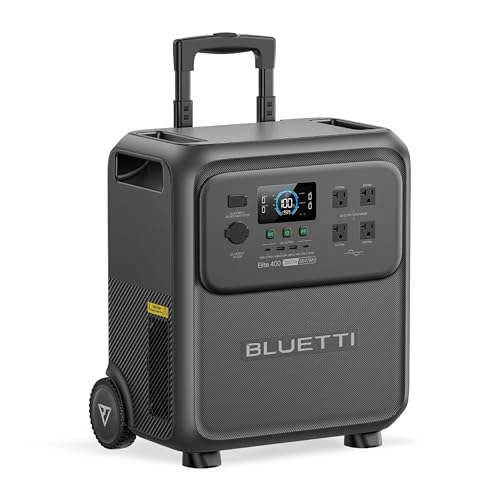 BLUETTI Elite 400
 Goal Zero Yeti PRO 4000
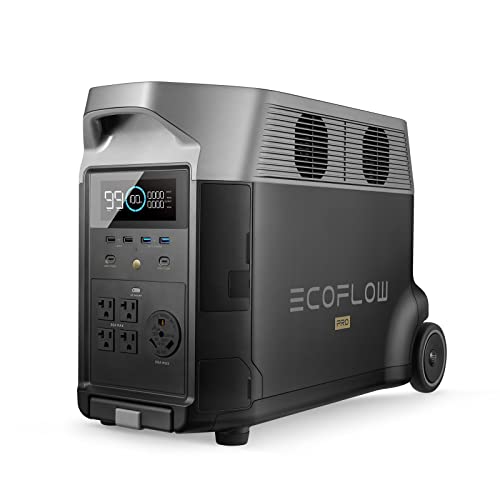 EcoFlow DELTA Pro
Which other Anker SOLIX models are similar?
How this page was made. Specs come from each manufacturer's official US spec page or manual, checked on the date shown; specs a manufacturer doesn't publish are marked "Not published". Runtimes are calculated (capacity × 85% inverter efficiency ÷ appliance draw), not measured. We haven't hands-on tested these units. Method and sources · Affiliate disclosure